Polling is dead. The Texas Midterms are about to prove it.
Polling is dead. The Texas Midterms are about to prove it.
Polling is dead. The Texas Midterms are about to prove it.
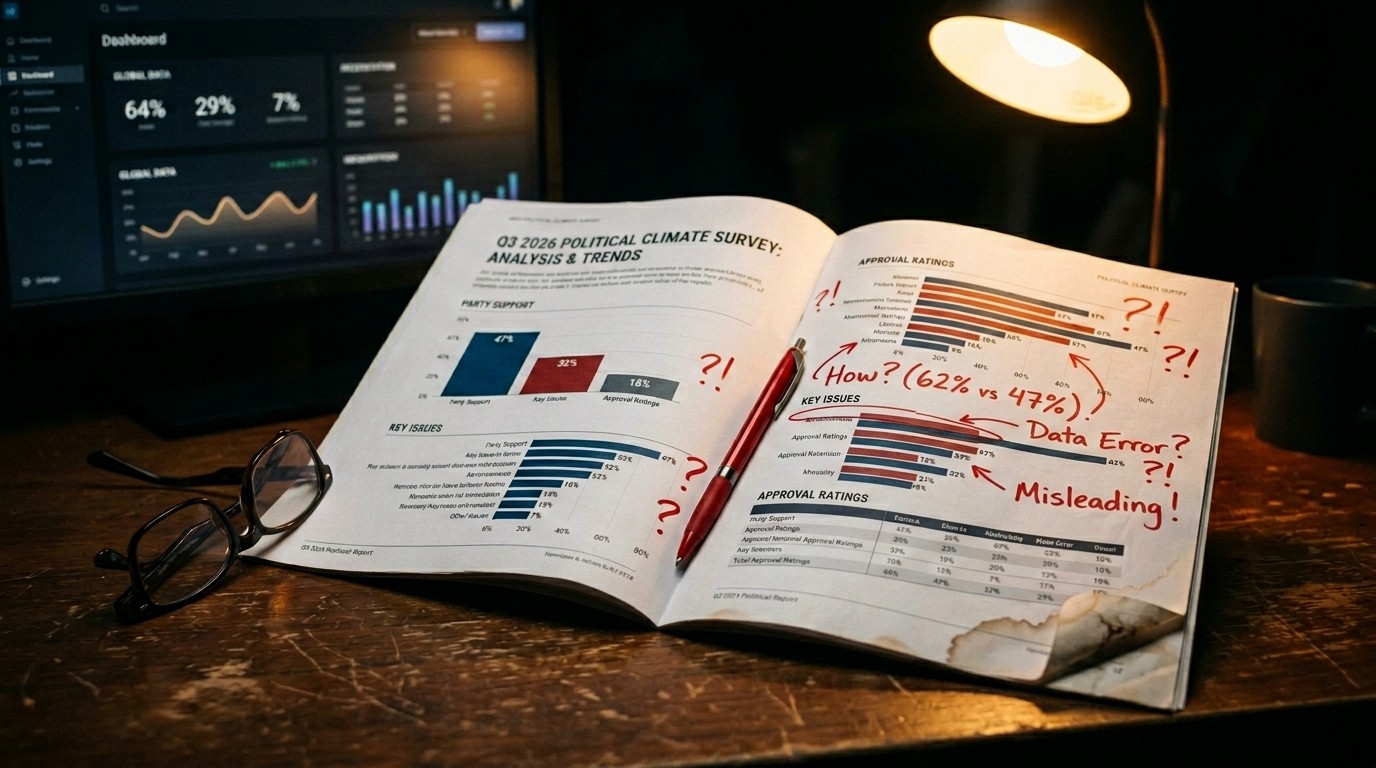
Rhetor co-founder Jeremy Jones argued on the Will Cain Show that 2026 would be the year traditional polling truly dies. A new Texas Senate poll reinforces why.
The University of Houston Hobby School of Public Affairs published a survey showing Ken Paxton at 38 percent, John Cornyn at 31 percent and Wesley Hunt a distant third at 17 percent. Media coverage has treated the results as near-definitive. But the underlying methodology raises questions that the political class should be taking far more seriously.
The survey captured 550 likely Republican primary voters through an online panel, carries a margin of error north of 4 percentage points and found 12 percent of respondents still undecided — just eight days before early voting begins. What it measures is name recognition and self-reported intention at a single moment in time. What it cannot measure is what actually decides elections: momentum, intensity and the velocity of change in voter sentiment.
What Snapshot Polling Misses
Polls are structurally designed to capture a static picture. They are not built to detect the dynamics that drive outcomes in competitive primaries — particularly three-way races headed for a likely runoff, where directional movement matters far more than any single data point.
Consider the context of this race. Cornyn’s allies have poured over $40 million into advertising to bolster the senior senator’s image. That level of spending buys familiarity. It does not buy enthusiasm. Meanwhile, Hunt entered the race months after his opponents and is still building awareness among a Republican electorate where 31 percent didn’t know enough about him to form an opinion as recently as last fall.
A snapshot survey registers where familiarity stands today. It tells campaigns nothing about the direction or speed of change — and in a runoff-bound primary, direction is what determines who makes the final ballot.
What Rhetor’s Sentiment Data Shows
Rhetor’s approach differs fundamentally from traditional polling. Rather than surveying hundreds of people, the platform analyzes millions of data points across the Texas political conversation — social media engagement, news velocity, search patterns, donation flows and real-time narrative dynamics.
The directional picture diverges sharply from what the UH poll suggests. Hunt’s net sentiment has climbed significantly over the past month. Paxton’s has declined over the same window. Cornyn, despite that massive advertising investment, remains deeply underwater in net enthusiasm — trailing Hunt by a wide margin in the metric that tracks not what voters say on a survey, but how they actually engage with candidates.
The gap between Hunt and the field on sentiment intensity is not narrowing. It is accelerating. That trajectory is not consistent with a “distant third.” It is consistent with a candidate whose signal traditional polls are not built to detect.
A Pattern of Structural Failure
This is not a problem isolated to one Texas survey. The polling industry’s foundation has been cracking for years.
Polls projected Trump losing in both 2016 and 2024. In 2024, Ann Selzer’s Iowa poll — widely regarded as the gold standard — showed Harris ahead by three points. Trump won Iowa by 13. A 16-point miss from the most respected pollster in America. She retired weeks later.
The structural problems run deeper than any single miss. Pew Research Center documented telephone survey response rates collapsing from 36 percent in 1997 to 6 percent by 2018, with some individual polls hitting below 1 percent. That collapse drove the industry toward online panels — the same methodology used in today’s UH survey. But online panels introduce different problems: self-selection bias means pollsters are surveying the kind of person who volunteers to take political surveys, not a representative cross-section of the electorate.
In either case, the result is a picture of who answers polls — not a picture of the electorate.
The Predictive Shift
Rhetor’s data identifies Hunt as the candidate moving in the metrics that actually predict outcomes — not name recognition among 550 respondents, but sentiment, intensity and momentum. These are the signals that moved before every major polling upset in modern politics.
Traditional polling will not survive the 2026 cycle in its current form. Predictive sentiment analysis is replacing it. And the Texas Senate primary is shaping up to be the first race where the gap between what polls show and what actually happens becomes impossible to ignore.
Rhetor co-founder Jeremy Jones argued on the Will Cain Show that 2026 would be the year traditional polling truly dies. A new Texas Senate poll reinforces why.
The University of Houston Hobby School of Public Affairs published a survey showing Ken Paxton at 38 percent, John Cornyn at 31 percent and Wesley Hunt a distant third at 17 percent. Media coverage has treated the results as near-definitive. But the underlying methodology raises questions that the political class should be taking far more seriously.
The survey captured 550 likely Republican primary voters through an online panel, carries a margin of error north of 4 percentage points and found 12 percent of respondents still undecided — just eight days before early voting begins. What it measures is name recognition and self-reported intention at a single moment in time. What it cannot measure is what actually decides elections: momentum, intensity and the velocity of change in voter sentiment.
What Snapshot Polling Misses
Polls are structurally designed to capture a static picture. They are not built to detect the dynamics that drive outcomes in competitive primaries — particularly three-way races headed for a likely runoff, where directional movement matters far more than any single data point.
Consider the context of this race. Cornyn’s allies have poured over $40 million into advertising to bolster the senior senator’s image. That level of spending buys familiarity. It does not buy enthusiasm. Meanwhile, Hunt entered the race months after his opponents and is still building awareness among a Republican electorate where 31 percent didn’t know enough about him to form an opinion as recently as last fall.
A snapshot survey registers where familiarity stands today. It tells campaigns nothing about the direction or speed of change — and in a runoff-bound primary, direction is what determines who makes the final ballot.
What Rhetor’s Sentiment Data Shows
Rhetor’s approach differs fundamentally from traditional polling. Rather than surveying hundreds of people, the platform analyzes millions of data points across the Texas political conversation — social media engagement, news velocity, search patterns, donation flows and real-time narrative dynamics.
The directional picture diverges sharply from what the UH poll suggests. Hunt’s net sentiment has climbed significantly over the past month. Paxton’s has declined over the same window. Cornyn, despite that massive advertising investment, remains deeply underwater in net enthusiasm — trailing Hunt by a wide margin in the metric that tracks not what voters say on a survey, but how they actually engage with candidates.
The gap between Hunt and the field on sentiment intensity is not narrowing. It is accelerating. That trajectory is not consistent with a “distant third.” It is consistent with a candidate whose signal traditional polls are not built to detect.
A Pattern of Structural Failure
This is not a problem isolated to one Texas survey. The polling industry’s foundation has been cracking for years.
Polls projected Trump losing in both 2016 and 2024. In 2024, Ann Selzer’s Iowa poll — widely regarded as the gold standard — showed Harris ahead by three points. Trump won Iowa by 13. A 16-point miss from the most respected pollster in America. She retired weeks later.
The structural problems run deeper than any single miss. Pew Research Center documented telephone survey response rates collapsing from 36 percent in 1997 to 6 percent by 2018, with some individual polls hitting below 1 percent. That collapse drove the industry toward online panels — the same methodology used in today’s UH survey. But online panels introduce different problems: self-selection bias means pollsters are surveying the kind of person who volunteers to take political surveys, not a representative cross-section of the electorate.
In either case, the result is a picture of who answers polls — not a picture of the electorate.
The Predictive Shift
Rhetor’s data identifies Hunt as the candidate moving in the metrics that actually predict outcomes — not name recognition among 550 respondents, but sentiment, intensity and momentum. These are the signals that moved before every major polling upset in modern politics.
Traditional polling will not survive the 2026 cycle in its current form. Predictive sentiment analysis is replacing it. And the Texas Senate primary is shaping up to be the first race where the gap between what polls show and what actually happens becomes impossible to ignore.
Category
Written by

Director of Communications
Category
Written by
Director of Communications
Category
Written by
Director of Communications
Blog and articles
Latest insights and trends
Blog and articles
Latest insights and trends

Mar 16, 2026
Small PR firms spend hours assembling executive media briefs by hand. Rhetor's AI-driven monitoring and narrative forecasting can turn that daily scramble into real-time intelligence clients actually use.
Mar 3, 2026
Texas votes today, and everybody is talking about Crockett versus Talarico. We have Talarico winning across all three turnout scenarios — his positive sentiment...
Feb 27, 2026
In 2016, California voters legalized recreational cannabis under Proposition 64 with a straightforward bargain: tax the product...

Feb 24, 2026
When organized criminals steal $250 million from programs meant to feed children, what should journalists call it?

Feb 23, 2026
California’s Solar on Multifamily Affordable Housing program promised to cut electricity bills for low-income renters.
Feb 20, 2026
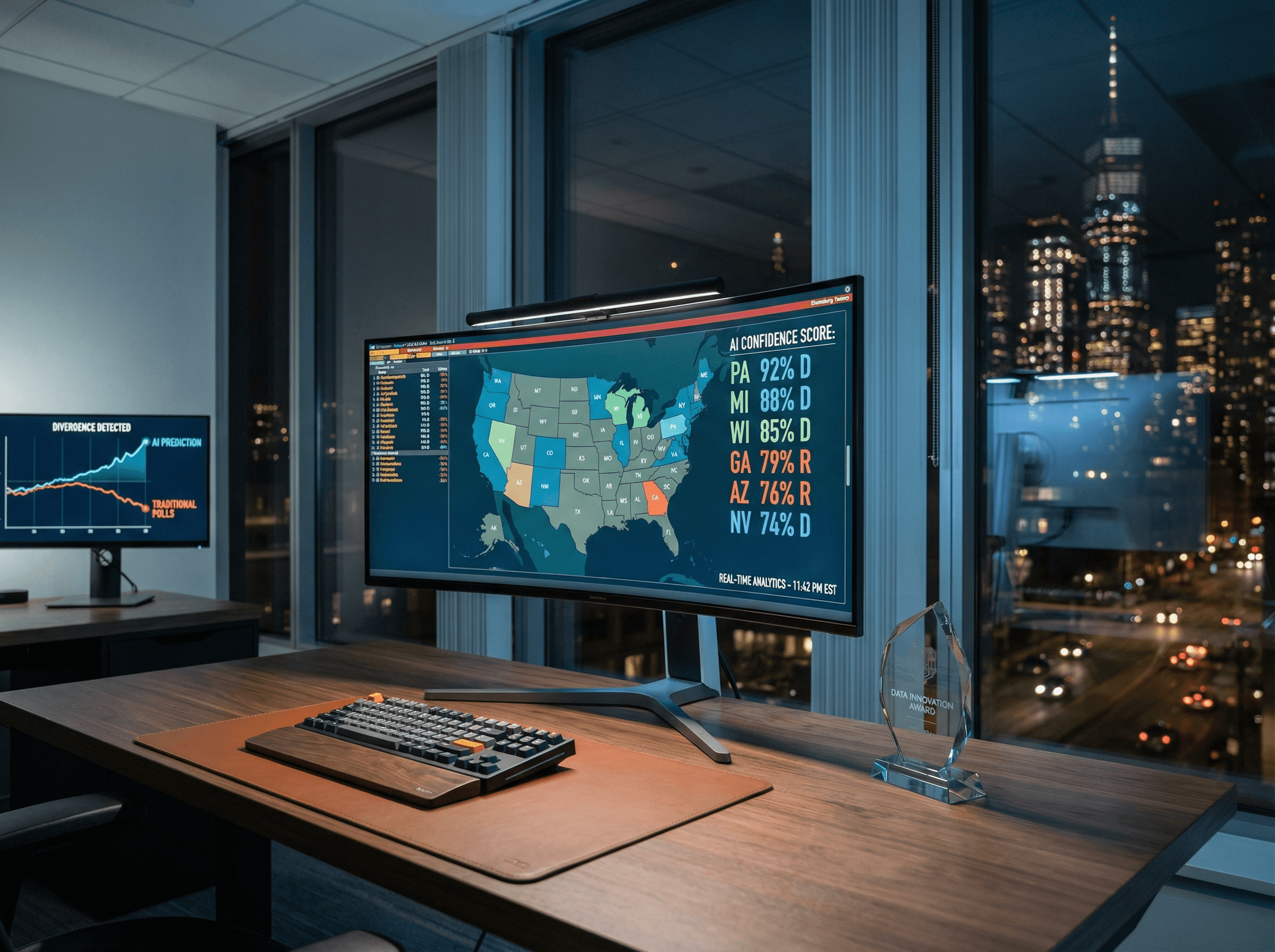
America’s most celebrated pollster predicted Kamala Harris would carry Iowa by three points.
Mar 16, 2026
Small PR firms spend hours assembling executive media briefs by hand. Rhetor's AI-driven monitoring and narrative forecasting can turn that daily scramble into real-time intelligence clients actually use.
Mar 3, 2026
Texas votes today, and everybody is talking about Crockett versus Talarico. We have Talarico winning across all three turnout scenarios — his positive sentiment...
Feb 27, 2026
In 2016, California voters legalized recreational cannabis under Proposition 64 with a straightforward bargain: tax the product...
Feb 24, 2026
When organized criminals steal $250 million from programs meant to feed children, what should journalists call it?
Feb 23, 2026
California’s Solar on Multifamily Affordable Housing program promised to cut electricity bills for low-income renters.
Feb 20, 2026
America’s most celebrated pollster predicted Kamala Harris would carry Iowa by three points.
Mar 16, 2026
Small PR firms spend hours assembling executive media briefs by hand. Rhetor's AI-driven monitoring and narrative forecasting can turn that daily scramble into real-time intelligence clients actually use.
Mar 3, 2026
Texas votes today, and everybody is talking about Crockett versus Talarico. We have Talarico winning across all three turnout scenarios — his positive sentiment...
Feb 27, 2026
In 2016, California voters legalized recreational cannabis under Proposition 64 with a straightforward bargain: tax the product...
Feb 24, 2026
When organized criminals steal $250 million from programs meant to feed children, what should journalists call it?
Feb 23, 2026
California’s Solar on Multifamily Affordable Housing program promised to cut electricity bills for low-income renters.
Feb 20, 2026
America’s most celebrated pollster predicted Kamala Harris would carry Iowa by three points.
Ready To Shape The Narrative?
" height="151.89999999999986px" id="JQyS1c4YN" width="630.5px"/></svg>)
AI powered tech for campaigns, lobby groups, and advocacy organizations. Get the information edge with speed your opponents can't match.
Copyright © 2026 Rhetor. All rights reserved.
Rhetor® is a Trademark of To The Moon Labs, Inc.
Ready To Shape The Narrative?
AI powered tech for campaigns, lobby groups, and advocacy organizations. Get the information edge with speed your opponents can't match.
Copyright © 2026 Rhetor. All rights reserved.
Rhetor® is a Trademark of To The Moon Labs, Inc.
Ready To Shape The Narrative?
AI powered tech for campaigns, lobby groups, and advocacy organizations. Get the information edge with speed your opponents can't match.
Copyright © 2026 Rhetor. All rights reserved.
Rhetor® is a Trademark of To The Moon Labs, Inc.